Operations
Featured
A facilitated half-day Lean Inception that takes a hotel operations problem from messy reality to an agreed MVP scope, success metrics, and a working prototype walkthrough — in a single working session.
Audience
Format
Duration
Category
§ 01Programme overview
This workshop compresses a Lean Inception into a single facilitated working session, turning a known operational problem into an agreed MVP, success metrics, and a working prototype walkthrough.
Horwath facilitators guide the team through a structured sequence borrowed from Paulo Caroli's Lean Inception method and adapted for hospitality operating teams. The room walks the current-state process step by step, names the constraints and systems involved, captures user stories from the people doing the work, votes on priorities, and agrees on what to build first. A working prototype is demonstrated during the wrap-up so the team leaves with something tangible — not just a write-up.
§ 03Curriculum
6 phases · ~4 hours · 8 facilitated activities · 1 working prototype walkthrough
20 min
Agree what we're actually solving before anyone reaches for a tool
Most operations problems arrive as a tangled bundle of symptoms. The session opens by separating the problem from the solutions people have already tried, naming who is affected, and writing a single problem statement everyone in the room agrees with. Without this step the rest of the day drifts.
The workshop sponsor states the business outcome they need and what "good" looks like.
Facilitators write a single-sentence problem statement and confirm it with every participant before moving on.
50 min
Walk the process step by step with the people who actually do it
§ 04From the room
§ 05Client perspective
“The sprint created alignment across operations, staffing, and guest experience in a way our usual meetings never do.”
“We came away with prototypes, priorities, and a shared operating picture our team could actually use.”
§ 06Ready to talk?
The APC team can adapt the format, the cohort mix, and the working agenda around the decision you actually need to make. Tell us what you’re planning and we’ll come back with a brief.
The team walks through the current process on a whiteboard, step by step, with the people who run it every day narrating. The facilitator captures the sequence, the constraints carried in people's heads, and the systems that touch the process. This is where assumptions die and the real shape of the problem becomes visible.
Step-by-step current-state mapping on the wall, narrated by the staff who own each step.
Capture the regulatory, operational, financial, and informal constraints the process must respect.
List every system, spreadsheet, app, and informal channel the process actually touches today.
50 min
Get the whole room writing — not just the loud voices
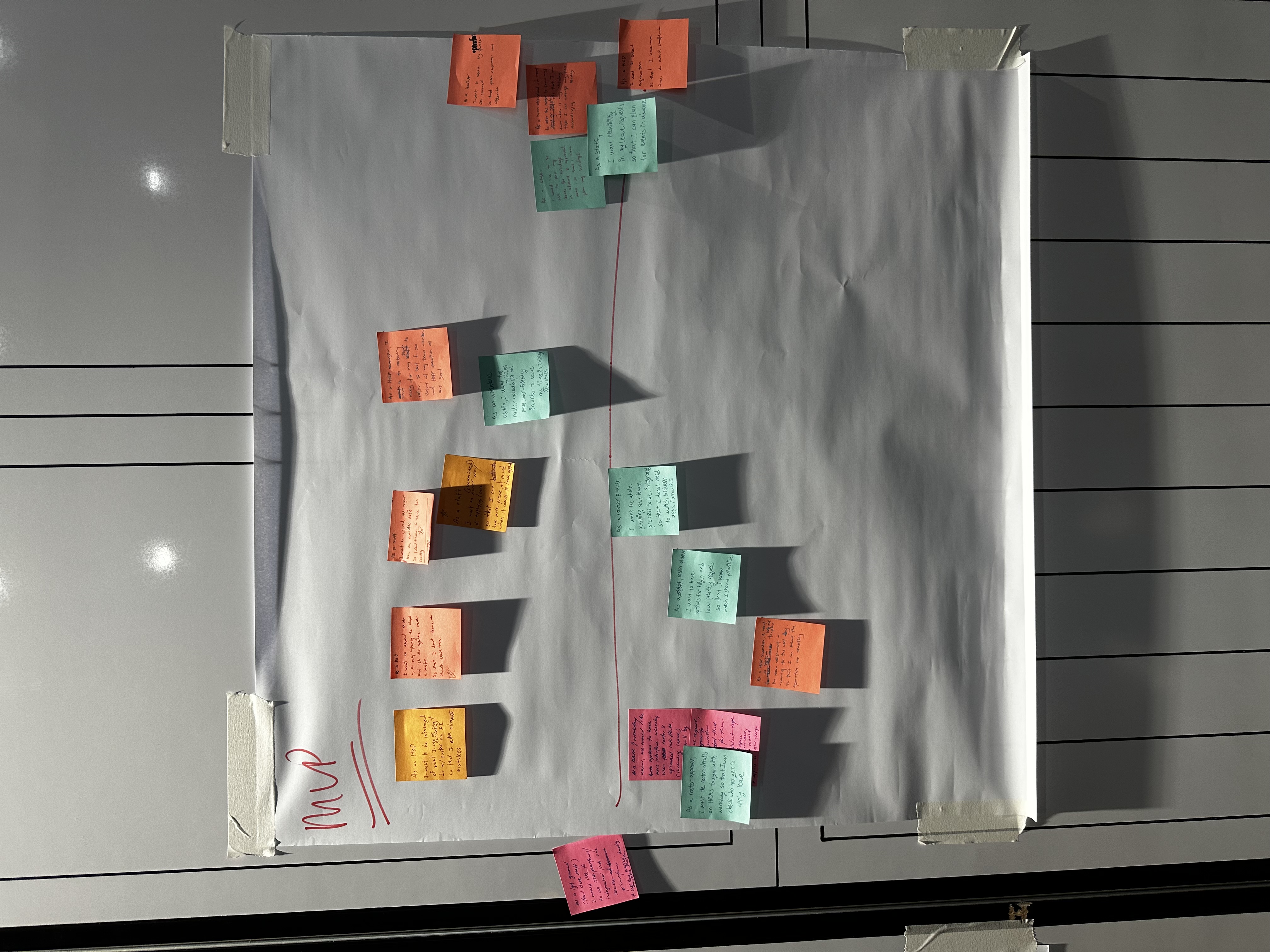
Every participant writes user stories on sticky notes, framed as "As a …, I want … so that …". The format forces clarity on who, what, and why. Stories from the frontline land alongside stories from management on the same wall, and the room sees the spread of needs in their own words.
Walk through the user story format with one or two hospitality examples to anchor the room.
Every participant writes stories independently — silent so frontline voices land alongside management.
Authors read their stories aloud, the facilitator clusters by theme, and duplicates collapse together.
30 min
Force a tradeoff between everything and what we build first
Every participant gets three dot-vote stickers and places them on the stories that matter most. The wall reorganises by vote count, and the facilitator helps the room draw the line between MVP and Nice-to-Have. The goal is a clear, defensible scope the sponsor can commit to in the room.
Three votes per participant, placed on the stories that would make the biggest difference.
Group discussion to draw the MVP line, surface tradeoffs, and confirm the sponsor agrees with the cut.
30 min
Decide what good looks like and what comes after the MVP
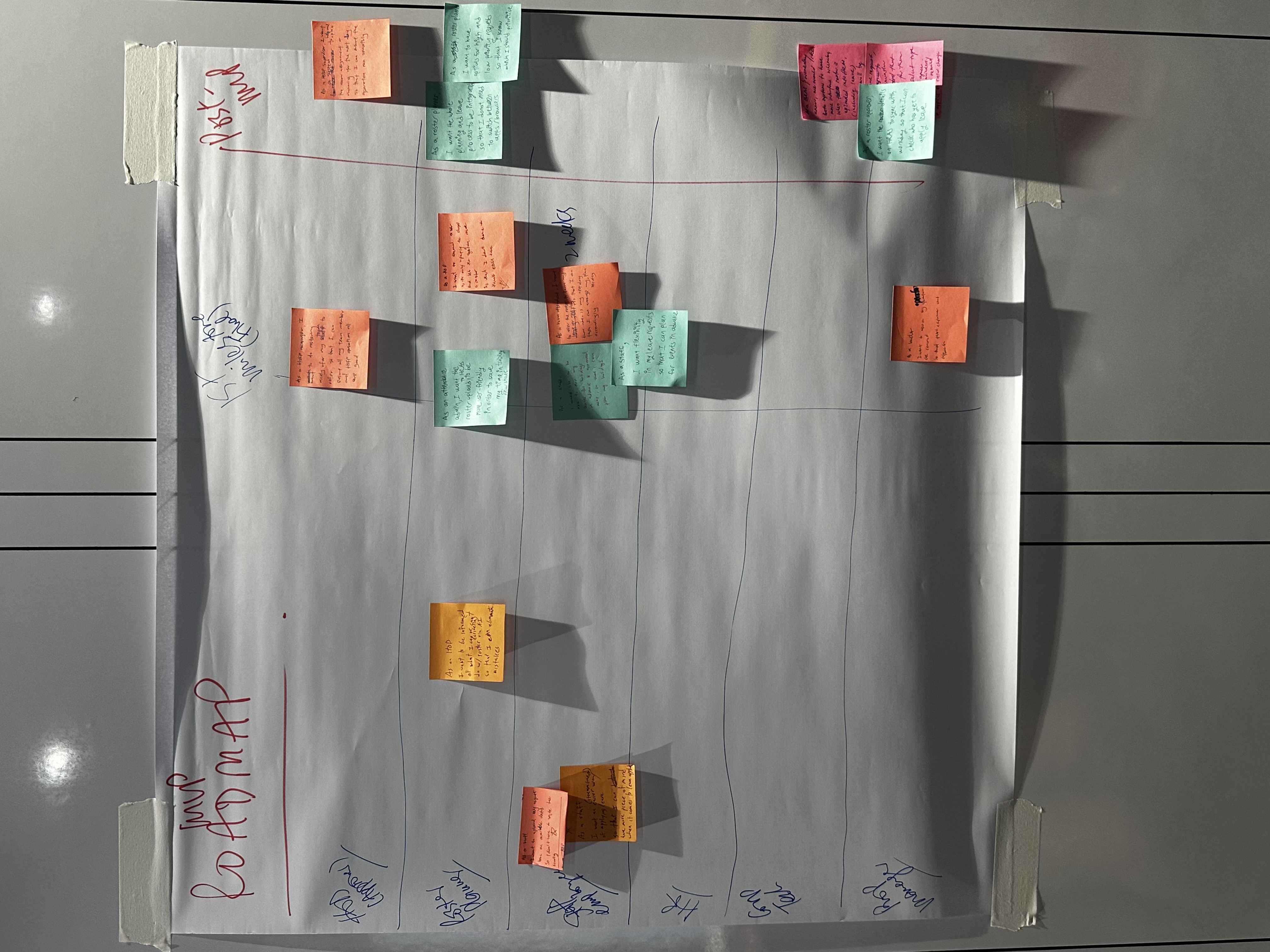
The room agrees on the metrics that will tell them whether the MVP is working — not vanity metrics, but the operational signals the team will actually watch. Then the remaining stories are sequenced into Phase 2 and Phase 3 swim lanes so nothing important is lost and the order of work is explicit.
Agree the operational metrics that will signal whether the MVP is delivering value.
Sequence non-MVP stories into Phase 2 and Phase 3 swim lanes with rough effort and dependencies.
30 min
Leave with something tangible — not just a write-up
While the workshop is running, a prototype is being built in parallel from the photos, sticky notes, and process artefacts captured in the room. The session closes with a live walkthrough of that prototype so the team sees their own ideas already taking shape, and confirms the next-step commitments before leaving.
Walk through a prototype built from the day's artefacts so the room sees their inputs already at work.
Confirm owners, dates, and the artefacts the team will share before the follow-up session.
